Research and Experiments: The Plant as Medium
My experiments with mugwort began where most of my film practice does: with a question about what the camera cannot hold. Documentary film, photojournalism, even experimental video — all these forms operate within what Karel Doing has called a fundamentally human-centred apparatus, calibrated to reproduce human perception and to produce the human viewer as its implied subject. What would it mean to make an image in which that assumption broke down?
Research and Experiments: The Plant as Medium
My experiments with mugwort began where most of my film practice does: with a question about what the camera cannot hold. Documentary film, photojournalism, even experimental video — all these forms operate within what Karel Doing has called a fundamentally human-centred apparatus, calibrated to reproduce human perception and to produce the human viewer as its implied subject. What would it mean to make an image in which that assumption broke down?
The phytogram, as Doing describes it, offers one answer. When a plant's own chemistry becomes the agent of image-making — when the internal compounds of a leaf are applied directly to photographic emulsion — the resulting image is not a representation of the world as seen by a human eye. It is a trace of a process that exceeds human authorship; as Doing writes, the image "moves by itself." The plant registers light, time, and its own chemistry simultaneously. The image that results carries what I have come to think of as the plant's memory of its encounter with the surface, an encounter that no human hand entirely controls.
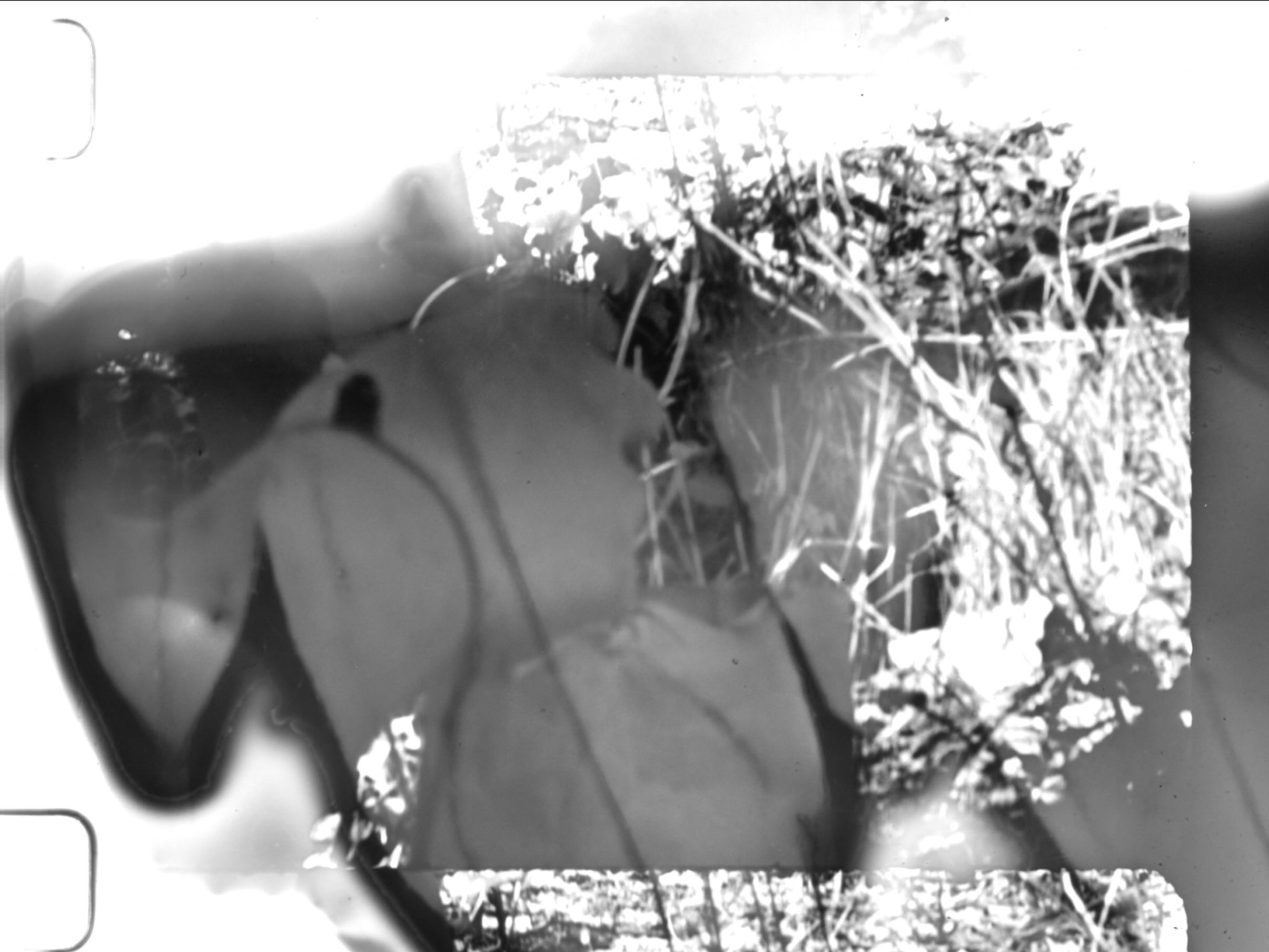
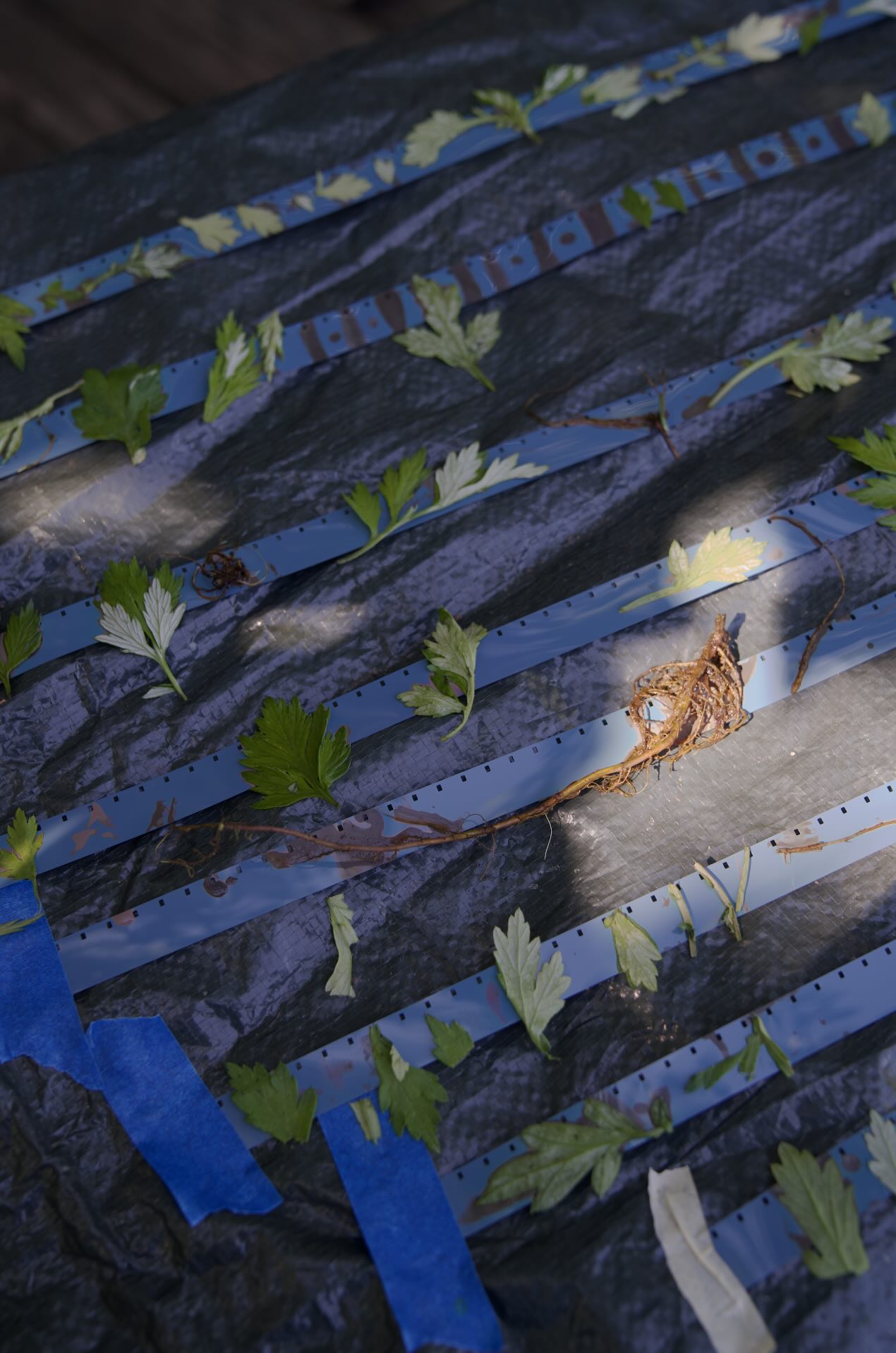
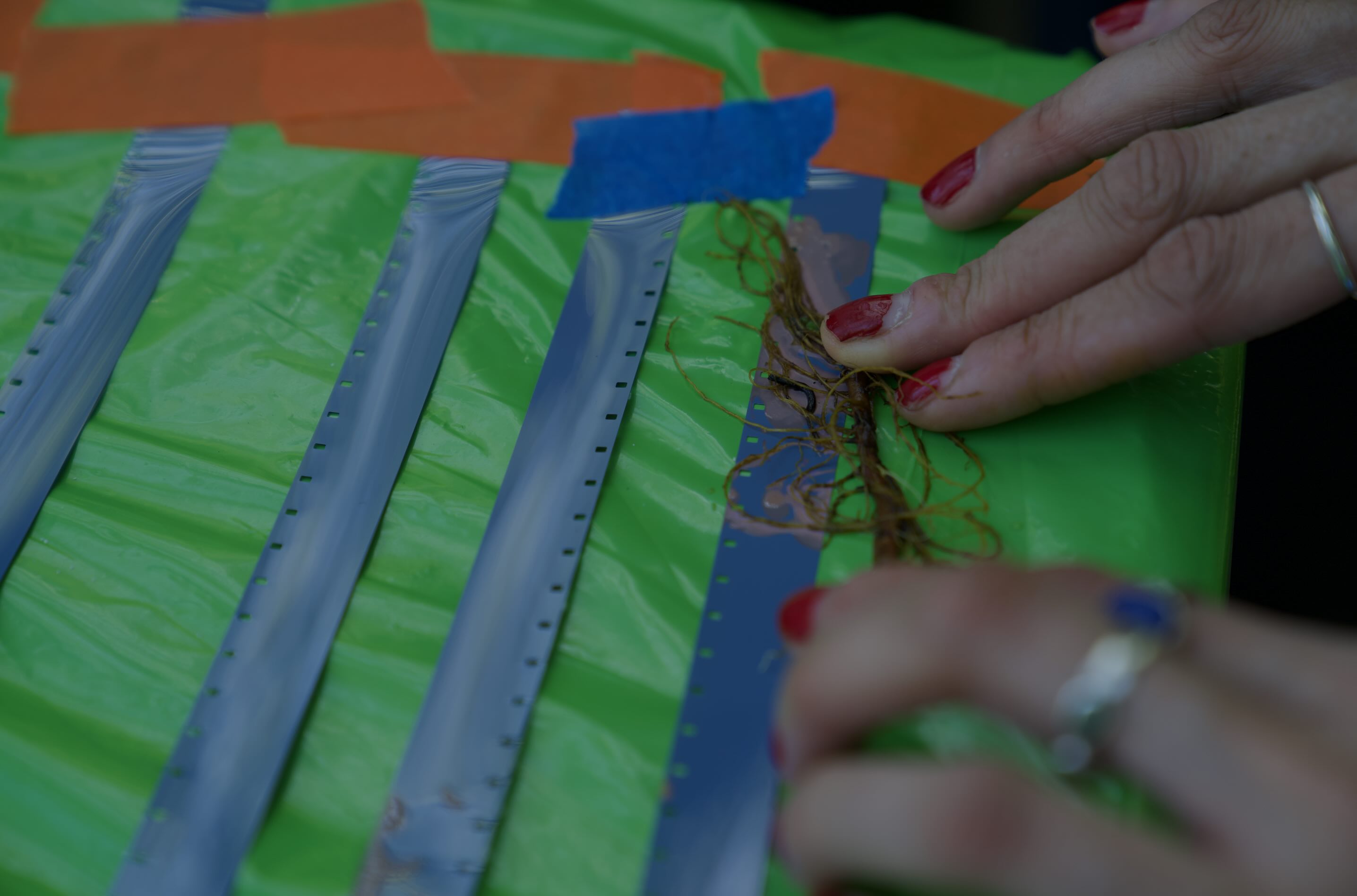
I began making phytograms with mugwort using phytography, working with unexposed 16mm film strips as my primary surface. The process involves preparing eco-developing solutions from the plant itself and then laying the plant directly onto the emulsion, sometimes weighting it, sometimes letting it rest loosely, and exposing the whole to light. Each strip becomes a contact zone between the plant's chemistry and the film's light-sensitivity. The images that result are indexical in the strictest sense: they are marks made by the thing itself, not a representation of it.
What I discovered through this practice was not primarily aesthetic, though the images have their own strange beauty — ghostly silver traces on dark ground, the outline of a leaf that is also a map of its own internal composition. What I discovered was something more like collaboration. The mugwort determined the image in ways I could not predict or fully control. I had to learn to read what it was offering rather than imposing what I wanted. This felt, unexpectedly, like a lesson in how to be an immigrant: attentive to the logic of a new environment, responsive rather than insistent, willing to let the encounter determine the outcome.
The phytogram also provided a way to think about media and migration that goes beyond the documentary image. The dominant forms through which migration is represented — news photography, surveillance footage, the case file — are all premised on a viewer positioned outside the experience being recorded. The phytogram proposes a different model: one in which the medium and the migrant are the same substance, in which the image is not about the plant but made by it.